The House Always Wins? Not If You Understand These iGaming Basics
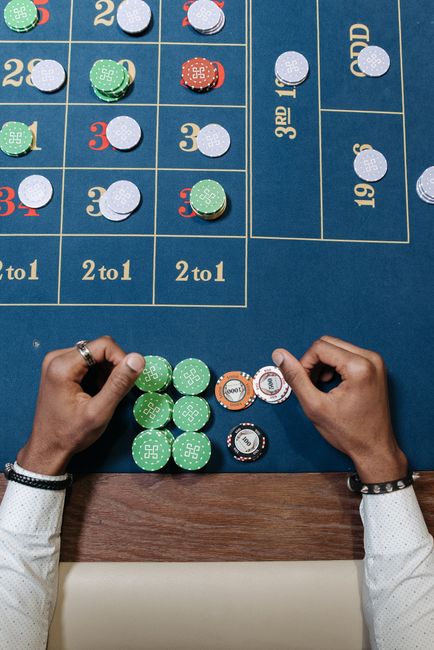
Everyone has heard the phrase "the house always wins." It's true, mathematically, over millions of hands and spins. But that's a macro truth about casino economics, not a prophecy about your Tuesday night poker session. The gap between the slogan and your actual experience is where the entire iGaming world lives. Understanding that gap — the variance, the edge, the discipline — is the difference between a player who treats gambling as entertainment with a budget and someone who feeds the machine until the machine eats them.
Let's cut through the smoke. This isn't a get-rich-quick pitch or a scolding lecture. It's a run through the four pillars of modern online gambling — casino games, slots, sports betting, and poker — with the kind of details that actually change how you play.
Know Your House Edge (It's Not Uniform)
The house edge is the mathematical advantage the casino holds on every bet. It's expressed as a percentage of your wager the casino expects to keep over the long run. The critical mistake beginners make is assuming all games are created equal. They're not even close.
- Blackjack (basic strategy): roughly 0.5% house edge. Play perfectly and you're in one of the fairest games in the building.
- Baccarat (banker bet): about 1.06%. The five percent commission on banker wins actually buys you a better edge.
- European Roulette: 2.7% — one green zero. American Roulette has two zeros and a 5.26% edge. Same game, nearly double the cost.
- Slots: typically 2% to 10% depending on the machine and jurisdiction. Loose slots exist, but they're not advertised.
- Keno and side bets: often 15% to 35%. This is where casinos make their real money.
That last line matters. Sportsbooks and casinos aren't profitable because blackjack players are unlucky. They're profitable because enough people play high-margin products. Every dollar you move from a 25% side bet to a 0.5% blackjack hand materially changes your expected loss. Do that math before you sit down, not after.
Slots: Volatility Is the Whole Story
Slot players obsess over RTP — return to player percentage — and it matters, but it's only half the picture. The other half is volatility, and it changes everything about your experience.
A high-volatility slot might have a 96% RTP with payouts concentrated in rare, huge wins. You could play 500 spins and never see anything meaningful. A low-volatility slot with the same 96% RTP pays smaller amounts frequently. Same theoretical return, completely different session. If your bankroll is $50 for an evening, high-volatility machines will eat it in twenty minutes and it will feel rigged. It isn't. It's just math doing math things.
Practical tips: If this is new to you, สล็อตเว็บตรง is a sensible next read.
- Check the paytable before spinning. Look at the max win and the bet sizing per line.
- Match volatility to your bankroll. Big bankroll, big swings. Small bankroll, grind it out.
- Use bonus rounds as information, not goals. They're random, not earned.
Sports Betting: Vig, Line Movement, and the Myth of the Lock
New bettors look at a moneyline and see a winner. Sharp bettors look at a moneyline and see a margin. That margin — the vig, or juice — is how sportsbooks guarantee profit regardless of outcome.
Standard pricing is -110 on both sides of a spread, meaning you risk $110 to win $100. That's a 4.55% theoretical hold if the action is balanced. Some books offer -105. Over 1,000 bets, that difference is hundreds of dollars. Line shopping isn't optional if you're serious.
Then there's line movement. When a line opens at -3 and moves to -6.5 by kickoff, money told you something. Sharp action moves lines. Public action also moves lines, but usually later and less efficiently. If you can consistently get a better number than the closing line, you're doing something right.
And please — there is no such thing as a lock. A lock is a marketing device. Every bet carries risk. If someone guarantees a winner, they're selling something.
Poker: The Only Game Where You Play the Players
This is the crucial distinction. In casino games and sports betting, you play against the house or the number. In poker, you play against people, and the house just takes a rake. That single fact changes the entire discipline required.
Poker rewards patience, position, and psychological observation over luck. A player with a 5% edge over the field will win over thousands of hands. A player with a 5% edge over a blackjack table will lose anyway, slowly, to the variance and the rake. Poker is technically beatable in a way slots never are. That's why professional poker exists and professional slot playing doesn't.
But the rake is real. Online cash games typically rake 4.5% to 5%, capped at a few dollars. In tournaments, the fee is baked into the buy-in. If the rake is high, your edge needs to be higher.
- Play tight from early position. Weak hands in bad seats bleed money.
- Watch patterns, not cards. Who bets when they miss? Who checks when they hit?
- Set stop-losses before you sit. Emotional decision-making is the rake that isn't on the chart.
- Move up only when you have 20+ buy-ins. Bankroll management is the difference between a hobby and a grind.
The Bottom Line: Play Within the Math
The single most useful shift you can make as an iGaming player is moving from outcome-thinking to process-thinking. The house edge is real, but it operates slowly. On any given spin, hand, or game, you're playing variance. Over thousands of them, you're playing the edge.
So choose games with edges you can live with. Budget losses as a cost of entertainment, not an investment. Use every tool the industry offers — deposit limits, session timers, self-exclusion — without treating them as insults. And when you find a platform or a game that feels designed to confuse you rather than inform you, walk away.
The house has an edge. It doesn't have to have your edge. The players who understand that distinction play longer, lose less, and enjoy it more.