Slots, Poker, and the Real Math Behind iGaming Wins
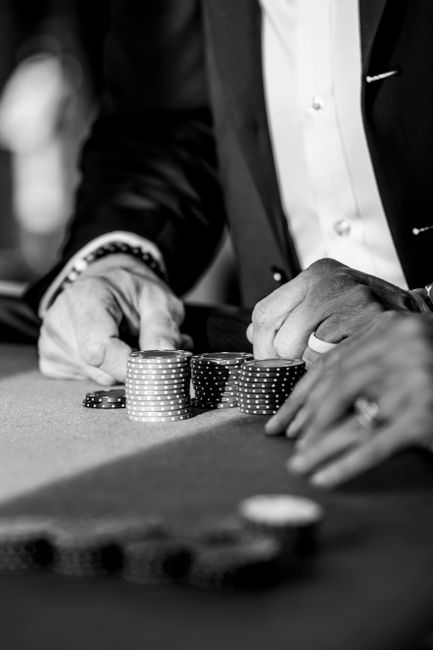
Ask ten casino players why they keep coming back and you'll get ten different answers: the thrill of a bonus round, the mental chess match of poker, the sweat of a last-minute parlay. But beneath all of it sits something most players never bother to understand, and it's the single biggest reason the house wins over time. I'm talking about the math. Not in a boring textbook way — in a way that actually changes how you play, how you pick games, and how you decide when to walk away.
I've spent years watching friends torch their bankrolls on slots they didn't understand and poker tables they had no business sitting at. The difference between a recreational player who lasts and one who busts in an hour almost never comes down to luck. It comes down to a handful of concepts that take twenty minutes to learn.
House Edge: The Number That Runs Everything
Every game in a casino, online or brick-and-mortar, is built around a mathematical advantage for the operator. That's not a scandal — it's the business model. The house edge is the percentage of every dollar wagered that the casino expects to keep over the long run. Different games have wildly different edges, and this is where smart players start paying attention.
- Blackjack (basic strategy): roughly 0.5% house edge. One of the best bets in the building.
- Baccarat (banker bet): about 1.06%. Deceptively simple, historically favorable.
- European roulette: 2.7%. Notice how much friendlier that is than the American version.
- American roulette: 5.26%, thanks to that extra double-zero pocket.
- Slots: anywhere from 2% to 10%+ depending on the machine and jurisdiction.
- Keno and big lottery-style games: often 25% or higher. Fun, but brutal.
See the spread? A player betting $500 an hour at blackjack loses about $2.50 an hour on average. The same player feeding a high-edge slot could lose $50. Same money, twenty times the bleed. Suddenly the game you choose matters more than the strategy you use.
The RTP Myth That Trips Up Slot Players
Slot machines advertise something called Return to Player, usually shown as a percentage like 96% or 94%. New players see that and think, "Great, I get 96 cents back for every dollar." That's not how it works. RTP is a long-term theoretical average measured across millions of spins — not a promise on your session. You can sit at a 97% RTP machine and lose your entire bankroll in fifteen minutes. You can sit at a 92% machine and triple up. Variance doesn't care about your feelings. For up-to-date information, visit kqbd.
What RTP does tell you is which games give you a fighting chance over hundreds of sessions. If you're picking slots anyway, there's no rational reason to choose a 92% game over a 97% one with similar volatility. Online casinos often publish RTPs in the game info panel; land-based machines usually don't. That's a genuine advantage for online players willing to do five seconds of research.
Volatility is the other half of the story. High-volatility slots pay rarely but can hit enormous. Low-volatility slots pay frequently in smaller amounts. Match the volatility to your bankroll, not your mood.
Poker Is a Skill Game Wearing a Gambling Costume
Here's where iGaming gets genuinely interesting. Poker is the one major casino game where a skilled player can achieve a positive expected value over time. The house doesn't take a cut of your stack — it takes a rake from each pot, and if you're good enough, that rake is just a cost of doing business.
But "good enough" is doing a lot of work in that sentence. The gap between a break-even player and a winning one is thin, and the gap between a winning player and a losing one is enormous. A few things separate them:
- Position awareness. Acting last is a structural advantage. Weak players treat every seat the same.
- Range thinking. Amateurs put opponents on a single hand; winners put them on a distribution.
- Bankroll management. You should have 20+ buy-ins for the stakes you play. Most people ignore this and go broke on a bad week.
- Game selection. Sitting at a table full of sharks because the stakes look fun is a donation.
- Emotional control. Tilt costs more money than bad beats ever will.
If you're not willing to study, poker is a worse bet than roulette. If you are, it's the only game in the building where the math can lean your way.
Bonuses, Free Bets, and the Fine Print Nobody Reads
iGaming promotions are everywhere, and they're not free money — they're marketing with strings. A 100% deposit match up to $500 sounds generous until you read the wagering requirement: 40x on the bonus amount, slots contributing 100%, table games 10%. That means a $500 bonus requires $20,000 in slot wagers before you can withdraw a cent.
Do the math before you claim anything. Ask three questions:
- What's the wagering requirement, and on what amount?
- What's the maximum cashout, if any?
- How long do I have to clear it?
Some bonuses are genuinely +EV for a disciplined player. Most are not. The ones worth taking are usually smaller, with lower wagering and no cap on winnings. The headline-grabbing 200% matches with 60x rollovers are designed to look like opportunity while acting as a trap.
Where Sports Betting Fits In
Sports betting has exploded into the mainstream, and the vig — the bookmaker's cut — typically sits between 4% and 5% on a standard two-way market. That's better than most slots but worse than blackjack. Where it gets interesting is in line shopping: the same game can be priced at -110 at one book and -105 at another. Over hundreds of bets, that half-point difference decides whether you're profitable or not.
Sharp bettors treat sportsbooks like a market, not a lottery. They track closing lines, exploit promotions, and understand that beating the number matters more than being right about who wins the game.
The Bottom Line
None of this is meant to talk you out of playing — it's meant to make sure you're playing the games that actually give you a shot. Casino operators aren't villains for building in an edge; that's how they stay in business. The players who get burned are the ones who never asked what the edge was. Pick low-house-edge games when you can, understand what RTP really means, treat poker like the skill game it is, read the bonus terms before you click claim, and shop your lines. Do those five things and you'll be ahead of 90% of the people sitting next to you. The lights and sounds are designed to keep you betting. The math is the only thing that keeps you solvent.